
Find Summit County Residents From a Record
The useful starting point depends on the fact already in hand. A current parcel or owner question belongs in Property Access. A name tied to a case, estate, or marriage belongs with the Clerk or Probate Court. A known person’s election information belongs in Ohio’s voter tool. An old address, surname, or household is better suited to the Library’s historic directories, maps, obituaries, and microfilm. Summit County residents appear across these official and archival sources, not in one complete government roll.
Each source has a built-in limit. A property record identifies a parcel-side owner relationship, not every person there. A court index is not a current-address statement. A voter lookup is designed for a named person and excludes protected records. A directory reflects its edition date. Use the narrower answer first, then test the result against an independent record before relying on it.
- Start with the county property record when a name or address is tied to a parcel. Save the parcel identifier, tax year, and legal description.
- Use Ohio My Voter Information only to check a known person’s registration and precinct details, not to browse a street.
- Search Recorded Documents or the Index Book Archive Viewer to connect a recorded party and legal description to a transfer.
- For a former household, compare the city-directory street section or Haines criss-cross volumes with the closest census, map, obituary, or estate record.
- When the web record is incomplete, contact the actual custodian, use its counter or request form, or consult Library Special Collections.
Summit County Resident Record Custodians
Summit County’s Fiscal Office is the address-led starting point because it brings together appraisal, tax, GIS, and Recording Division functions. The Clerk’s Legal Division holds the Common Pleas civil, criminal, domestic-relations, and appellate trail. Probate runs separately for estates, guardianships, marriage licenses, and related matters. The Board of Elections maintains county election records, while Akron-Summit County Public Library Special Collections is the key historical counterweight for directories, maps, obituaries, deeds, and estate material. Each custodian answers a defined question and keeps its own access route.
Fiscal Office Recording Division
175 S. Main St., 4th Floor
Akron, OH 44308
330-643-2712
Fiscal Office Property Access
Countywide appraisal and tax records
Online property search
1-888-388-5613
Summit County Board of Elections
1050 E. Tallmadge Ave.
Akron, OH 44310
330-643-5200
Search Summit County Parcels and Owners
Property Access provides the county’s published property-search fields: Parcel, Route, Owner, Address No., Street, Zip, Tax Year, sorting, and results-per-page controls. The Owner field accepts last name first, with published percent-separator examples. For a street search, the instructions use a number and street name without a directional or suffix. The data update daily, so the tax year needs attention when a current owner relationship matters.
That search is a strong first step for a parcel, a recorded owner, or an address trail. It does not prove every person at the physical address. When a card has separate situs and correspondence information, they answer different questions. Save the parcel and legal description, then use them to test the recorded document rather than treating a shared name as a complete match.
The official Property Access landing page below is the correct starting screen for the Summit County residents directory’s parcel path.
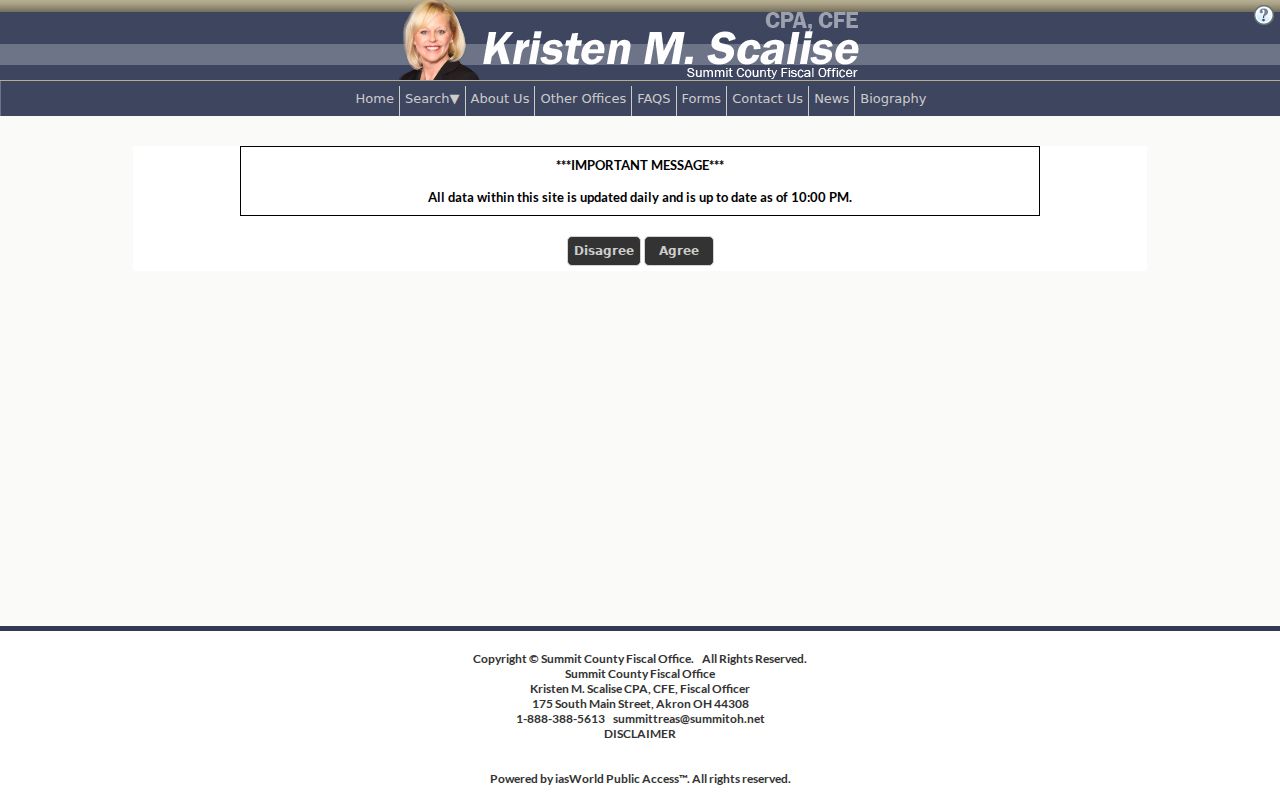
Property Access distinguishes the property-side connection from a broader claim about a household.
Trace Summit County Recorded Transfers
The Fiscal Office Recording Division preserves deeds, mortgages, easements, plats, releases, land contracts, condominium records, and other indexed instruments. A deed can document a recorded transfer. A mortgage or release instead documents financing. A plat or legal description anchors a property when the street number has changed. Use the party name, document type, date, and legal description together.
Summit County’s access split is unusually important for historical work. Browser search and images reach 1988 forward, while the Index Book Archive Viewer covers 1840–1988. The Recording Division also provides fourth-floor public computers and a mail-copy route. Early research therefore does not end when a web search does.
The Recording Division’s official document route documents the access path captured below.
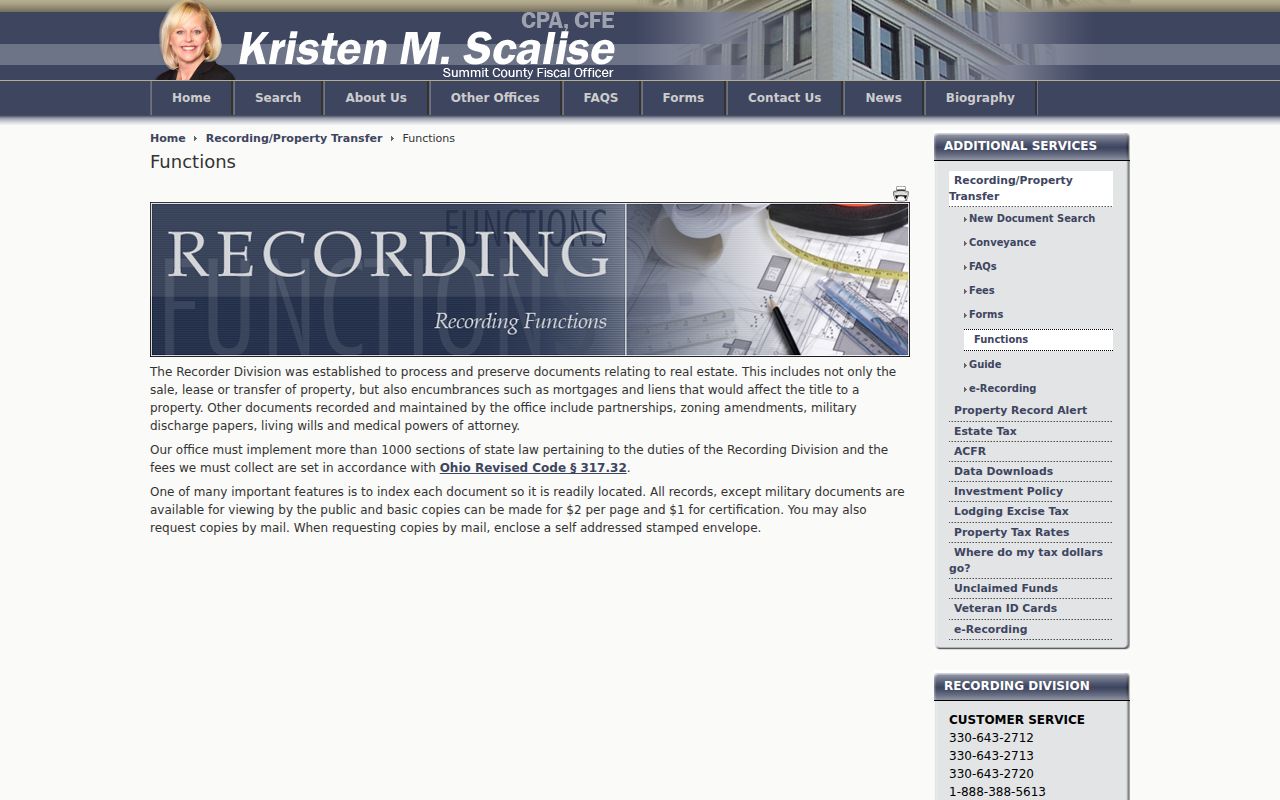
The online index and older archive-viewer path should be treated as connected parts of one title-history search.
Separate Summit County Court Trails
Court records are divided by court and case type. The Clerk’s Legal Division covers Common Pleas civil, criminal, domestic-relations, and appellate records. Probate maintains its own estates, guardianships, marriage, and related case system. Akron Municipal Court handles matters within its municipal jurisdiction. A party-name hit only becomes useful after checking the case number, type, date, party role, and the court that owns the file.
The Clerk’s division-selection page is the official route for the main Clerk systems. It also identifies historical records. The Clerk recommends web retrieval for later files and a request or File Room review for earlier material. The public case-search screen below shows why selecting the correct division comes before interpreting a name match.
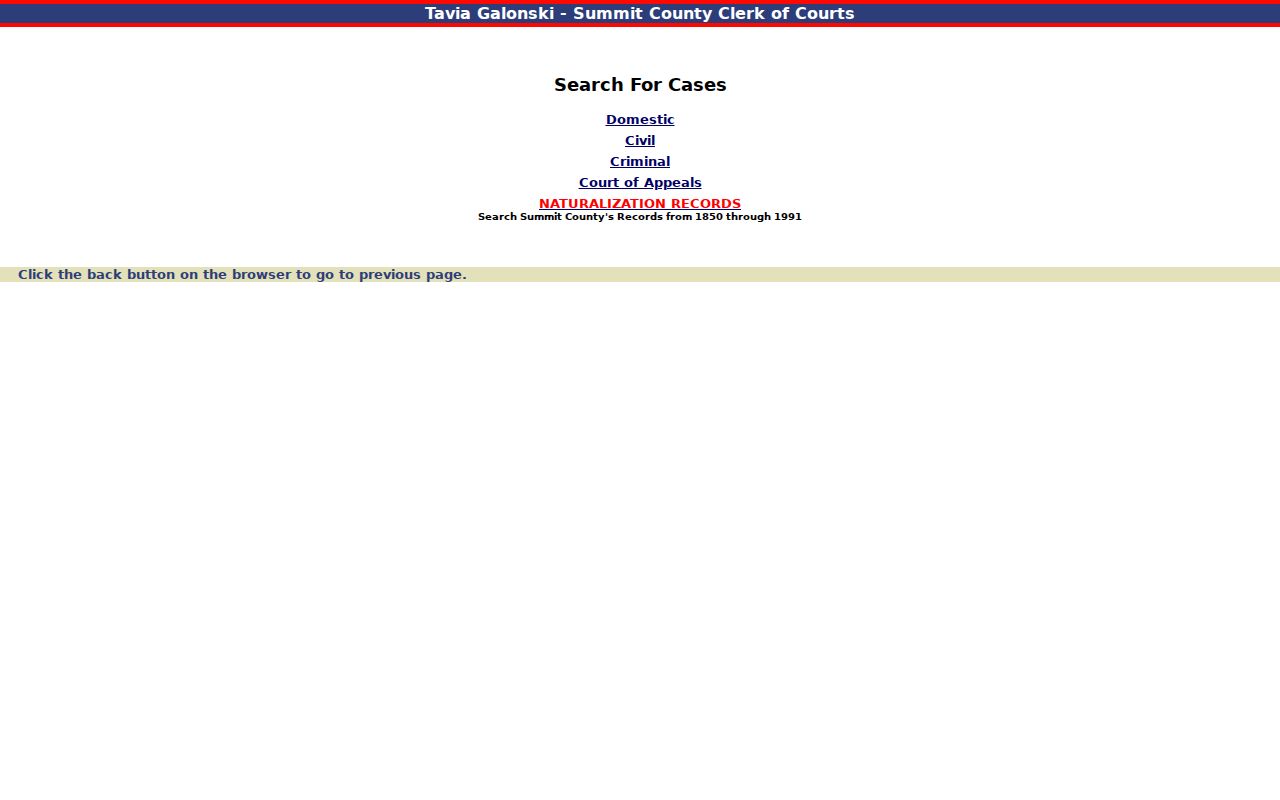
The Clerk route is not a substitute for Probate or municipal-court records when a case belongs elsewhere.
Akron Municipal Court publishes its own case-search and public-records routes. Its official landing page is shown below, which is useful when the date, offense level, or location points to municipal jurisdiction.
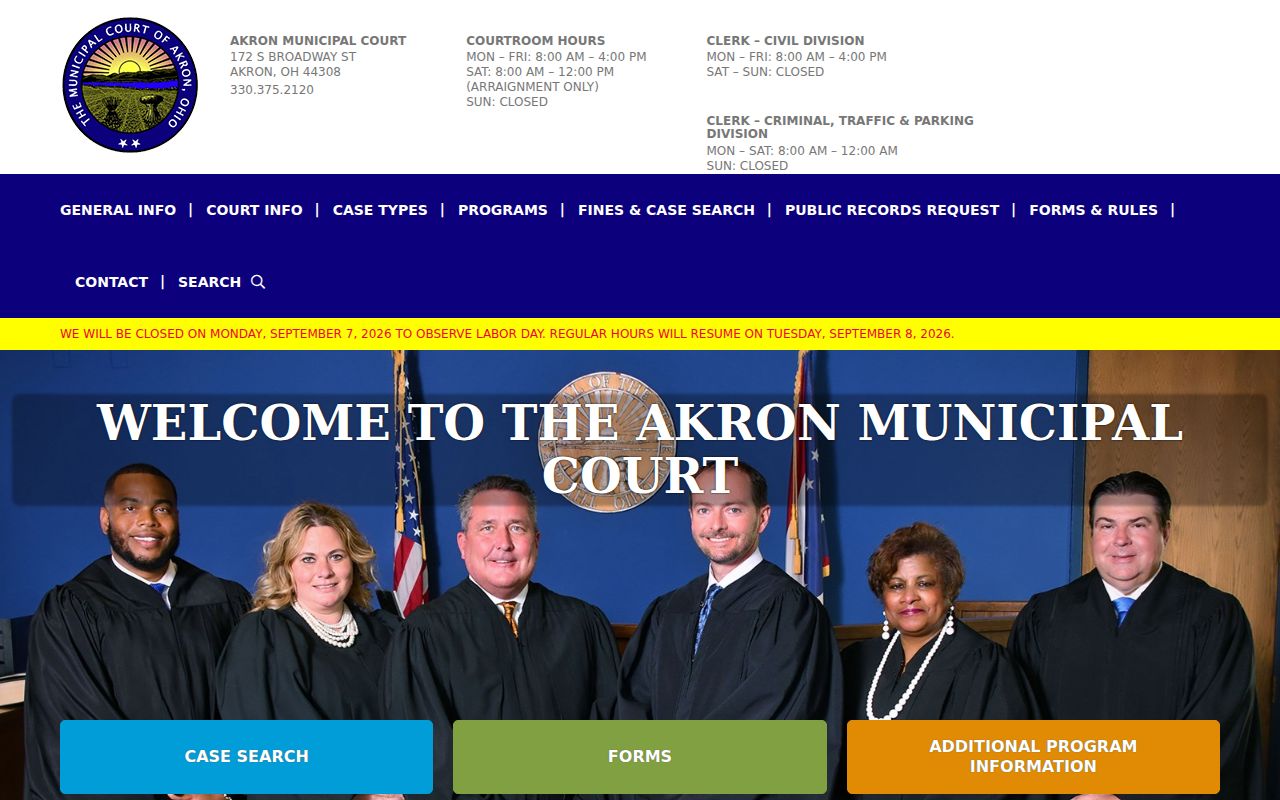
Confirm a material court fact with the owning court or Clerk, because online docket information can be restricted, incomplete, or redacted.
Current Summit County Resident Sources
There is no single current residents directory for Summit County. The closest public sources are purpose-built systems that record a particular relationship: ownership, registration, court participation, estate involvement, credential, or historic affiliation. Use the source only for the relationship it actually records. A current property owner, a registered voter, and a party in a filing are not interchangeable descriptions.
| Source | Who It Lists | Keeper | Access |
|---|---|---|---|
| Property Access | Named recorded owners and parcel links | Fiscal Office | Daily-updated public search |
| My Voter Information | Known registered voter’s election information | Ohio Secretary of State | Name and county confirmation tool |
| Recorded Documents | Grantors, grantees, and instrument parties | Recording Division | Web, IBAV, counter, or mail |
| Court and Probate indexes | Parties to public cases or estates | Owning court | Portal and records-room routes |
| Credential and business systems | Public professional or filing affiliations | Ohio agencies | Statewide lookup, not home proof |
A name-and-record question benefits from the detailed Summit County resident lookup method, which compares independent fields before connecting results. For a street or a past address, switch to the parcel or historical-directory trail instead of repeating a name search across unrelated systems.
Check a Known Summit County Voter
Ohio’s My Voter Information requires first name, last name, and county. It can confirm election-administration information for a known person, including registration, precinct, and polling location. It is not an ordinary address browser and should not be described as a block roster. The statewide registration database is public subject to R.C. 3503.13 exclusions.
For a local public election record that is not available online, contact the Board of Elections with a clear record description. The Secretary of State’s DATA Act portal also provides county registration snapshots, but it is a structured public-file route rather than a quick lookup. Its archives and public fields remain subject to the same protected-address and identifier limits. Absence from a voter result is not proof that no one lives at an address.
Use Summit County Vital and Probate Records
Summit County Public Health issues Ohio certified birth and death copies through online, phone, counter, and mail channels. The research reports $22 per certified copy, plus a listed card-processing charge for online orders. Ohio birth and death records are public, with a focused restriction for a decedent’s Social Security number during the first five years after death. A record request needs identifying facts, not guesses.
Probate Court holds estates, guardianships, marriage licenses, and related records separately from the Clerk Legal Division. Its Historical Marriage Index reaches September 9, 1980 forward, while older research may require the records room and Special Collections. The Public Health ordering route appears below, followed by the Probate eServices entrance.
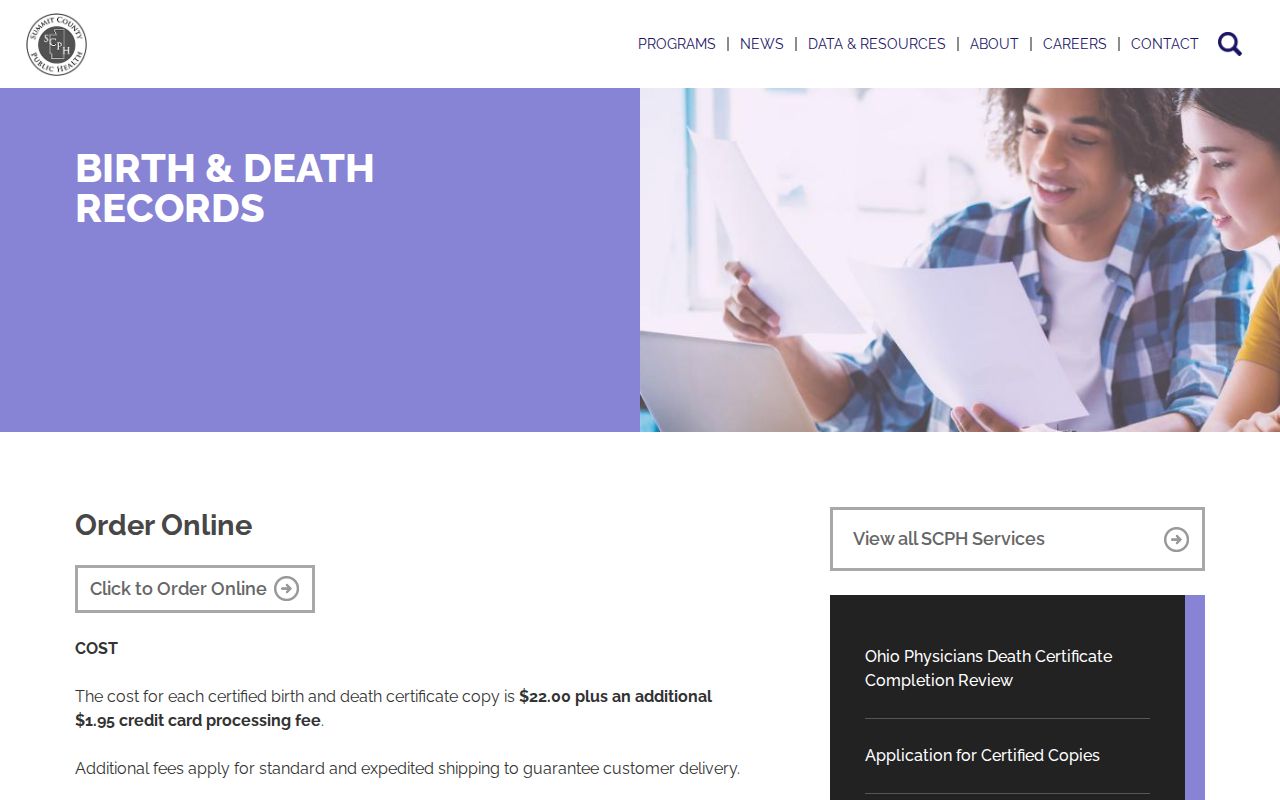
Vital records can support a dated family connection, but an index or certificate should be read for the specific event it records.
Probate eServices has public case search, calendar, payment, and document-image functions subject to confidentiality and image availability.
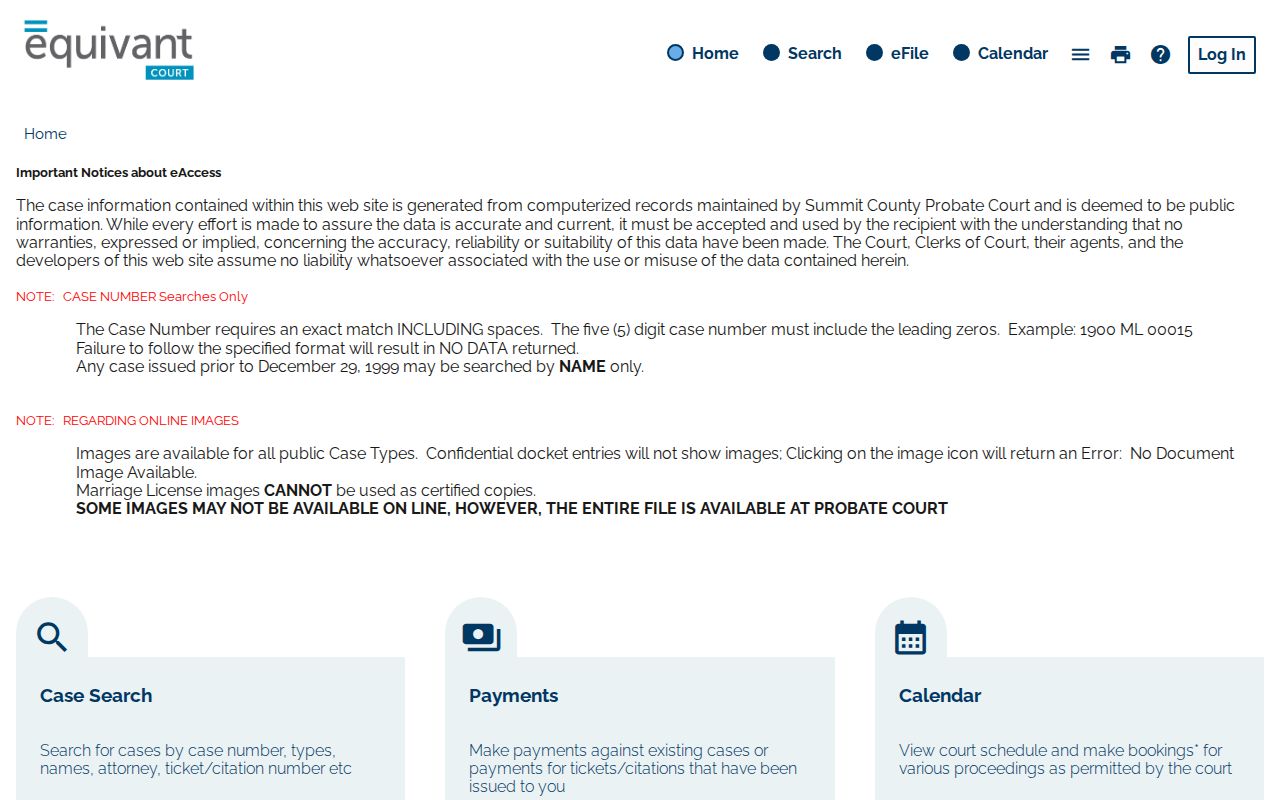
For a material estate or marriage fact, use the Court’s records room when an image is unavailable or a certified record is needed.
Request a Summit County Record That Is Offline
Ohio’s Public Records Act, R.C. 149.43, gives any person access to records kept by a public office subject to exemptions. Inspection should be prompt and copies produced within a reasonable period, but the statute does not impose one universal deadline. The best request names the office, record type, date range, and identifiers already found. Ask to inspect when the exact document is unknown, then order only the pages that matter.
The Clerk has an electronic request form and a File Room for older court material. The Recorder has web, Index Book Archive Viewer, counter, and mail-copy paths. Special Collections accepts research requests and supports a reading-room approach for historical directories, maps, microfilm, and local indexes. A public-records request cannot bypass a court rule, statutory confidentiality, or sealed record.
Ohio’s published statute is the official reference shown in the capture below.
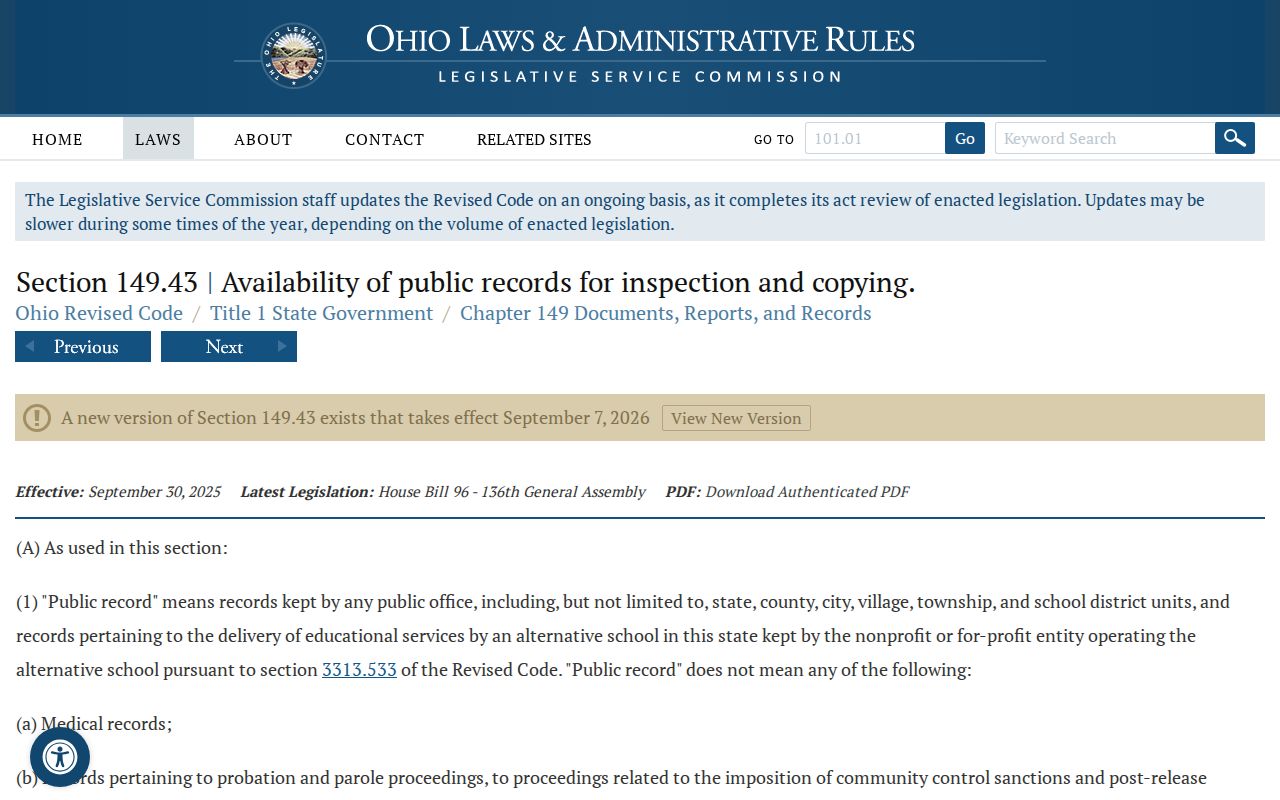
A precise request helps the custodian locate a public record without turning a broad name search into an unsupported conclusion.
Keep Summit County Searches on Official Paths
Record systems answer different questions, and public-safety systems should stay in their own lane. Ohio DRC’s official search covers people currently incarcerated in Ohio prison, under Department supervision, judicially released, or listed in a stated status. Its residential county and ZIP filters apply only to certain supervision statuses and can reflect a last recorded address. It is not a county jail roster or a general resident locator.
The official Ohio DRC Offender Search is shown below. It is useful only for the custodial status it states, not for assumptions about a current address or personal safety.
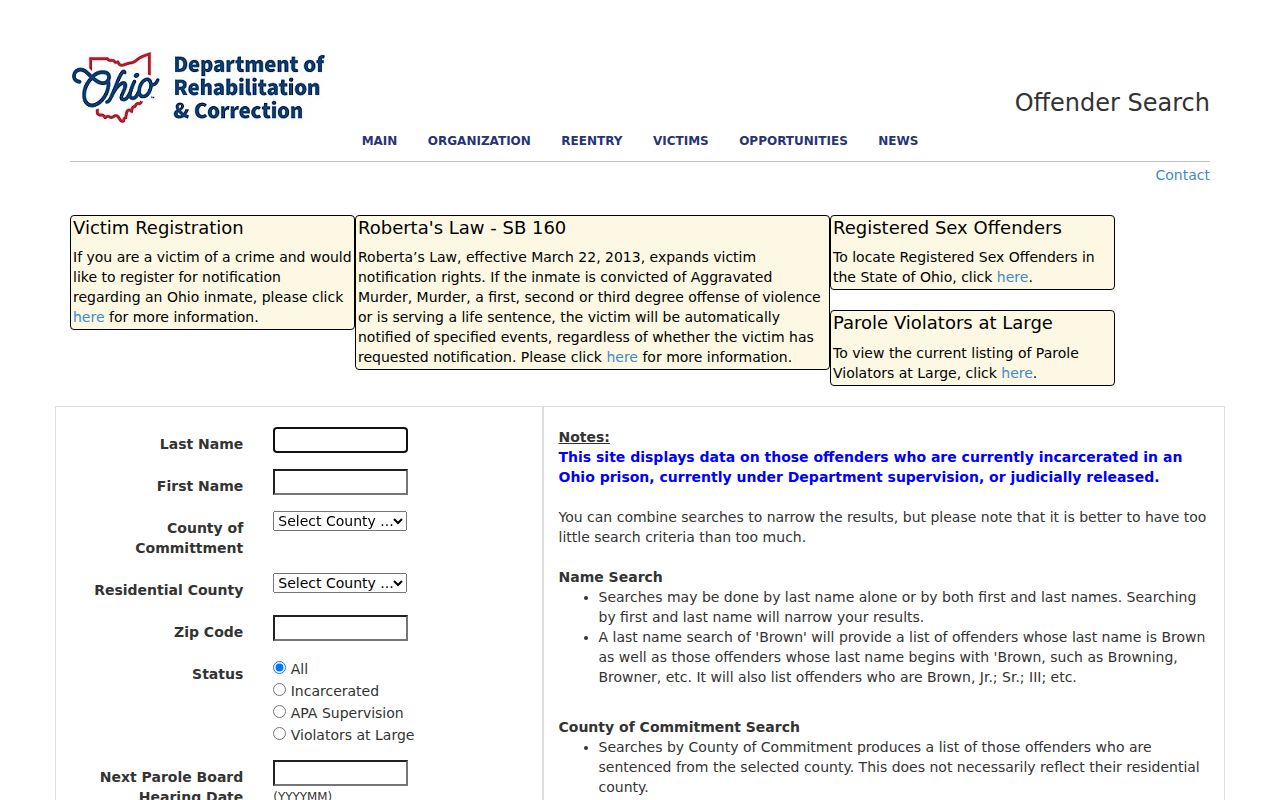
Enter an official domain directly and verify a record with its custodian, especially because Summit offices have warned about impersonating record and payment sites.
Historical Summit County Resident Directories
Akron-Summit County Public Library’s historic city-directory collection reaches from 1859 to the present, with a digitized selection from 1859–1969 that includes gaps. The printed and digitized books can place a named person or business at an address in a particular edition. Later Haines Akron City and Suburban Criss-Cross volumes reverse the search from address to name in the Special Collections research room. Akron-area telephone directories begin in 1914, and the library also holds maps, Beacon Journal material, obituary indexes, estate sources, and historic deed tools.
A historical listing is dated evidence, not a claim about current identity or legal title. The library warns that early twentieth-century street numbering often changed, so compare cross streets, maps, and legal descriptions before matching an old number to a present parcel. The detailed collection runs, publishers, and reading method appear in the Summit County city directory collections.
Summit County Records Start Before the Web
Summit County was created in 1840 from parts of Medina, Stark, and Portage territory, so earlier family or land research may belong in a parent county. The Recorder’s 1840 start and its 1988 web cutoff explain why a search can move among browser documents, index books, Fiscal Office maps, Library microfilm, and Summit Memory. The Fiscal Office Scanned Maps collection adds Red Books from 1846–1900, an 1870 landownership atlas, Hard Cards from about 1940–1970, and Mylar maps from about 1970–1995.
This local records geography is useful when a modern address lacks an older equivalent. Follow the legal description, lot, block, plat, or cross streets through the records instead of forcing a later street number into an earlier book. The overlapping county and library collections preserve the continuity that a single portal cannot show.
Use records carefully. Public sources can be incomplete, updated, or protected by law. Confirm important facts with the custodian and never use a record to stalk, harass, intimidate, or harm anyone.
Rebuild a Summit County House Story
Summit County’s local research institutions make it possible to test an old home story against more than one source. The Library’s 2026 House Detective training pairs city directories, maps and atlases, and Fiscal Office records. Start with a dated address or lot description, then compare a directory listing with a tax map, recorded transfer, and the appropriate directory or telephone-book year. That sequence gives a person researching relatives, an inherited house, or a neighborhood story a way to separate ownership, occupancy, and map evidence.
Special Collections is on the Main Library’s third floor at 60 S. High Street and combines access to city directories, telephone books, Beacon Journal microfilm and indexes, maps, grantor/grantee records, estate and will materials, naturalizations, cemetery and funeral resources, yearbooks, and Summit Memory. Staff research requests and reading-room work are documented alternatives when an online volume, parcel card, or court index does not reach the needed period. Use the exact spelling and date from the source first, then test a variant only when an address, relationship, or organization connects it to the same individual.